
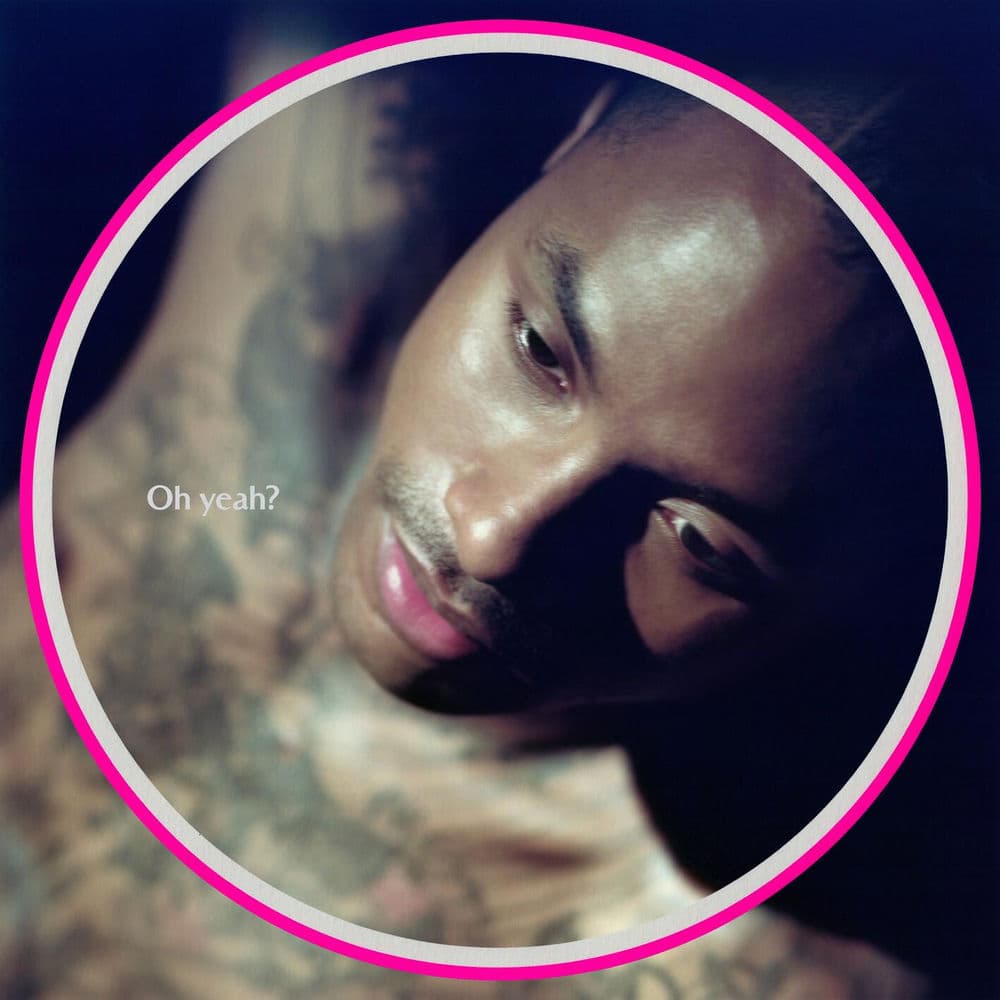
Oh yeah?
Steve LacyA bold and sonically adventurous album that doesn't always stick the landing, but showcases Steve Lacy's willingness to evolve beyond expectations.
Open on SpotifySteve Lacy's newest album is not what many people were expecting, and that's arguably one of its greatest strengths. Rather than trying to recreate the sound that made Gemini Rights such a commercial success, Lacy leans heavily into a psychedelic, '70s-inspired R&B aesthetic filled with warped guitars, hazy synths, and vintage textures. The result is an album that feels ambitious, unpredictable, and distinctly his own. Instead of chasing trends, he doubles down on experimentation, continuing to blur the lines between alternative rock, funk, soul, and contemporary R&B in a way that few artists can.
One thing that immediately stands out is the production. Steve Lacy has always been one of the most inventive producers in modern R&B, and that talent is on full display here. Every song is layered with interesting guitar tones, unconventional chord progressions, and subtle sonic details that reward repeat listens. Even when a track doesn't fully land, there's almost always something happening instrumentally that keeps it engaging. The album sounds rich, colorful, and incredibly well-crafted from a production standpoint.
That said, I do think the production often overshadows the songwriting itself. Many of the tracks feel more like ideas or sketches than fully realized songs. Lacy experiments with structure, pacing, and melody throughout the album, which gives it an exciting sense of spontaneity, but it also makes certain songs feel incomplete. There are moments where it seems like a track is building toward something bigger, only for it to end before reaching its full potential. While that loose, free-flowing style works in some cases, it occasionally becomes distracting and leaves the album feeling less cohesive than it could have been.
Tracks like "LoveSexDrugBomb" perfectly showcase what makes this record exciting. It's infectious, energetic, and packed with personality, combining memorable melodies with some of the album's strongest instrumentation. Songs like this prove that Lacy's creative risks can absolutely pay off. On the other hand, tracks like "Pure Color" don't leave the same impression. Despite having an interesting atmosphere, it feels underdeveloped, lacking the emotional payoff or memorable songwriting needed to match the quality of its production. It isn't necessarily a bad song—it just feels like it never fully blossoms into what it could have been.
It's also impossible to discuss this album without acknowledging the expectations surrounding it. It's been four years since Gemini Rights, the album that catapulted Steve Lacy into mainstream success. Songs like "Bad Habit" became massive cultural moments, earning platinum certifications and introducing his music to an audience far beyond his longtime fans. Following an album with that level of impact is never easy, and comparisons were inevitable. Instead of attempting to recreate that formula, Lacy takes a creative risk by making something far less commercial and much more experimental.
While I don't think this project reaches the same highs as Gemini Rights, I also don't think that was necessarily the goal. This feels less like an album built around hit singles and more like an exploration of new sounds and artistic directions. It's an imperfect record, but it's one that values creativity over accessibility, and there's something refreshing about that. Even when the songwriting falls short, the ambition behind the project is impossible to ignore.
Overall, Steve Lacy's newest album may not be the instant classic that many fans were hoping for, but it remains a fascinating listen. Its lush production, psychedelic influences, and willingness to experiment make it one of the more unique R&B releases in recent memory. While the songwriting doesn't always match the strength of the instrumentals, the album still succeeds in expanding Lacy's artistic identity and proving that he's more interested in evolving than repeating himself. It may not surpass Gemini Rights, but it adds another compelling chapter to his career and suggests there's still plenty of room for him to grow.